Identify, define, structure, deliver.
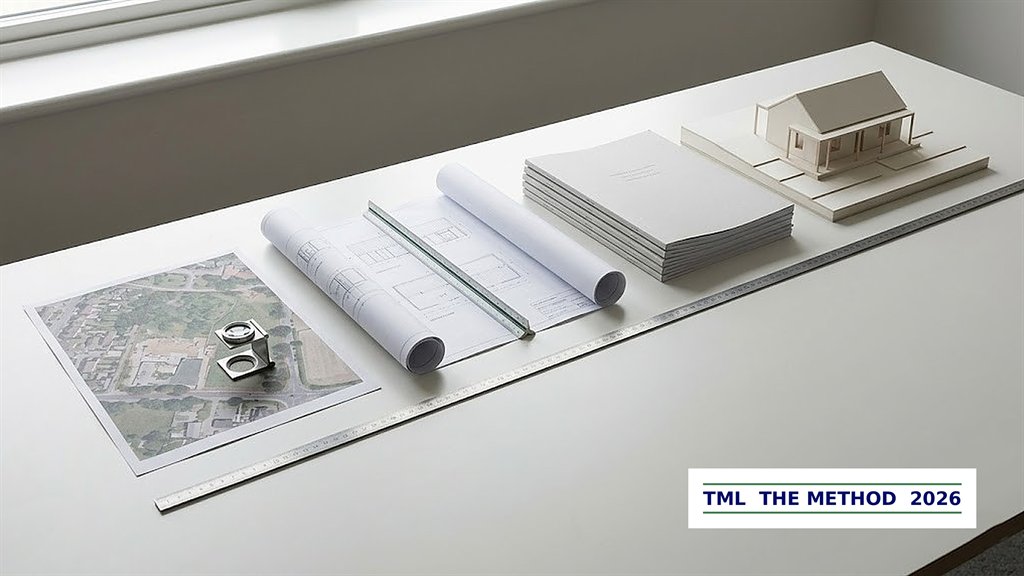
The difference between an operator partner and a developer is not capital, and it is not delivery. It is whether the same team owns both. Capital on its own does not create value in a real asset. Delivery on its own does not either. The value sits in the decisions that connect them, and those decisions leak away every time a scheme crosses from one team to another at a handover. The operator-partner method is built to remove those handovers. It runs in four steps, and each step is a filter. A scheme that fails a filter does not get our capital or our team.
Identify asks the hard question first. What is the real unit of work here. For the Ministry of Health programme in Saudi Arabia, the answer was not eight hospitals. It was one programme. Eight 50-bed general hospitals on rural sites, where supply chains stretch and site support thins out. Read as eight separate jobs, the scheme competes with itself for labour and plant. Read as one programme, the design and build sequence standardises, procurement runs so the sites do not fight for resources, and the lessons from the first hospitals carry into the last. The clinical specification held across all eight. Identifying the right unit of work is the difference between a programme that compounds and eight jobs that drain each other.
Define sets the standard before anything is priced. The Olaya compound in Riyadh was 300 family apartments at a luxury specification. Three hundred of anything is a consistency problem. The standard signed off on the last apartment has to be the standard set on the first, or the specification erodes across the scheme and takes the value with it. We held it by running design intent, procurement, build and commissioning as one defined scope under one team, rather than a brief thrown over a wall to a contractor. Definition is not paperwork. It is the standard the whole scheme is measured against later.
Structure is where the standard becomes a financial term rather than a promise. The Heights Programme, three UK city schemes with JMS Financial and JMS Capital as strategic partners, is the clearest case. 1,070 apartments and 194,000 square feet of commercial space across three sites, inside a nine-figure programme. Birmingham led the sequence and set the operating template. Capital structuring and delivery decisions ran from the same room, so the standards agreed at definition were written into how the scheme was financed and governed, not added afterwards. When the people who structure the money also own the build, the financing carries the standard instead of fighting it.
Deliver is where the industry usually loses what the first three steps built, because delivery is handed to a separate team as a separate stage. The MASIC Laam complex in Riyadh, a turnkey community for 11,000 people, shows the alternative. At that scale the utilities are the scheme, not an add-on. A 400 cubic metre per day grey water treatment plant, a 3,000 cubic metre underground tank, and a fully automated supply and distribution system were scoped, sequenced and commissioned by the same team that owned the buildings. Deliver means the asset is verified against the brief at handover, on its own operating data, not signed off on a contractor's word.
These four steps are not a brochure. They are how a scheme is read before it is backed, and how it is run once it is. The method is what separates an operator partner from a developer who sells at handover or a contractor who builds to a brief someone else wrote. Across nineteen years, three continents and an institutional client list, the schemes that passed all four filters earned our capital and our team. The schemes that failed one are the schemes we walked away from. That discipline is the point, not the exception to it.
Rami Saadi
CEO